
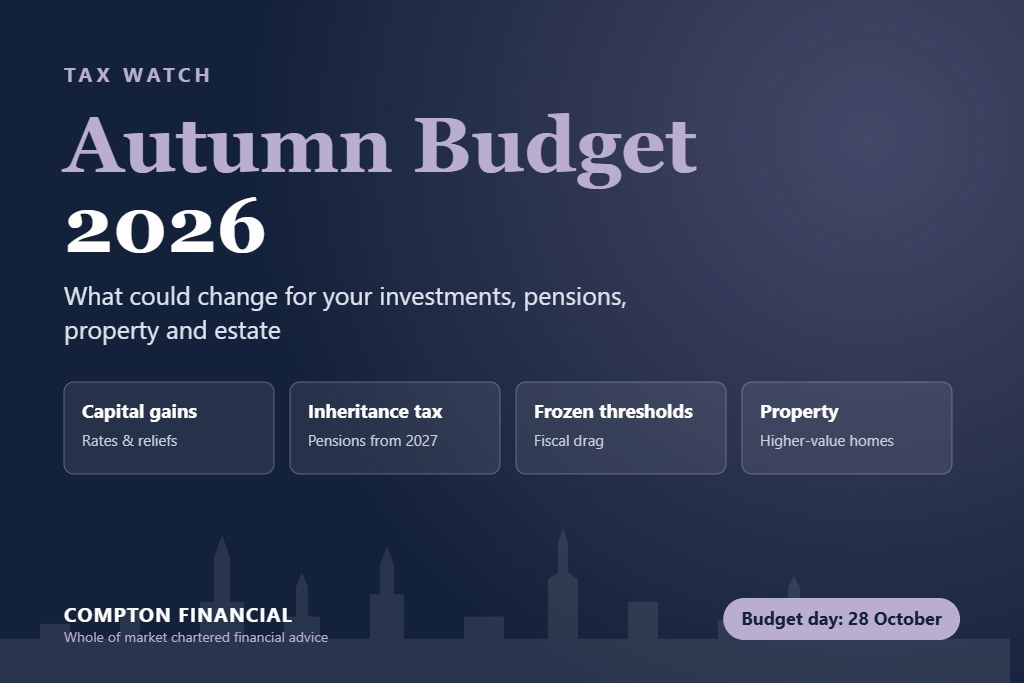
Chancellor John Healey delivers his first Autumn Budget on 28 October 2026. Prime Minister Andy Burnham has committed to Labour’s manifesto pledge not to raise the main rates of Income Tax, National Insurance or VAT. But with spending pressures high and limited room under the fiscal rules, that does not mean taxpayers are off the hook. Here is what could be on the table, and what you can sensibly do before Budget day.
Why the main tax rates being ruled out doesn’t mean no tax rises
With the three biggest taxes off limits, attention has shifted to other sources of revenue: wealth, investments, property and pensions. Expect plenty of predictions between now and 28 October. Most of them remain speculation, and nothing is confirmed until the Chancellor stands up.
Capital Gains Tax could come under scrutiny
Capital Gains Tax (CGT) is one of the most talked-about areas. Possible options include:
- raising CGT rates closer to Income Tax rates
- changing the reliefs and allowances available to investors and business owners
Changes like these would affect anyone selling investments, second homes or a business. The annual CGT exempt amount is already small, so more investors are paying tax on gains made outside tax-efficient wrappers. That makes the timing of disposals, and the use of ISAs and pensions, more important than ever.
Property and wealth in focus
Property tax could also feature, with speculation centring on higher-value homes. The government has denied reports that it plans to replace Council Tax and Stamp Duty with a land value tax in this Budget.
A broader wealth tax has been discussed, but there is no confirmed proposal. Inheritance Tax (IHT) remains one to watch, particularly as most unused pension funds are due to fall within the IHT regime from April 2027.
The quiet impact of frozen thresholds
Tax rises don’t need a headline rate change. Keeping allowances and thresholds frozen while wages and asset values rise gradually pulls more people into tax, or into a higher band. This is known as fiscal drag.
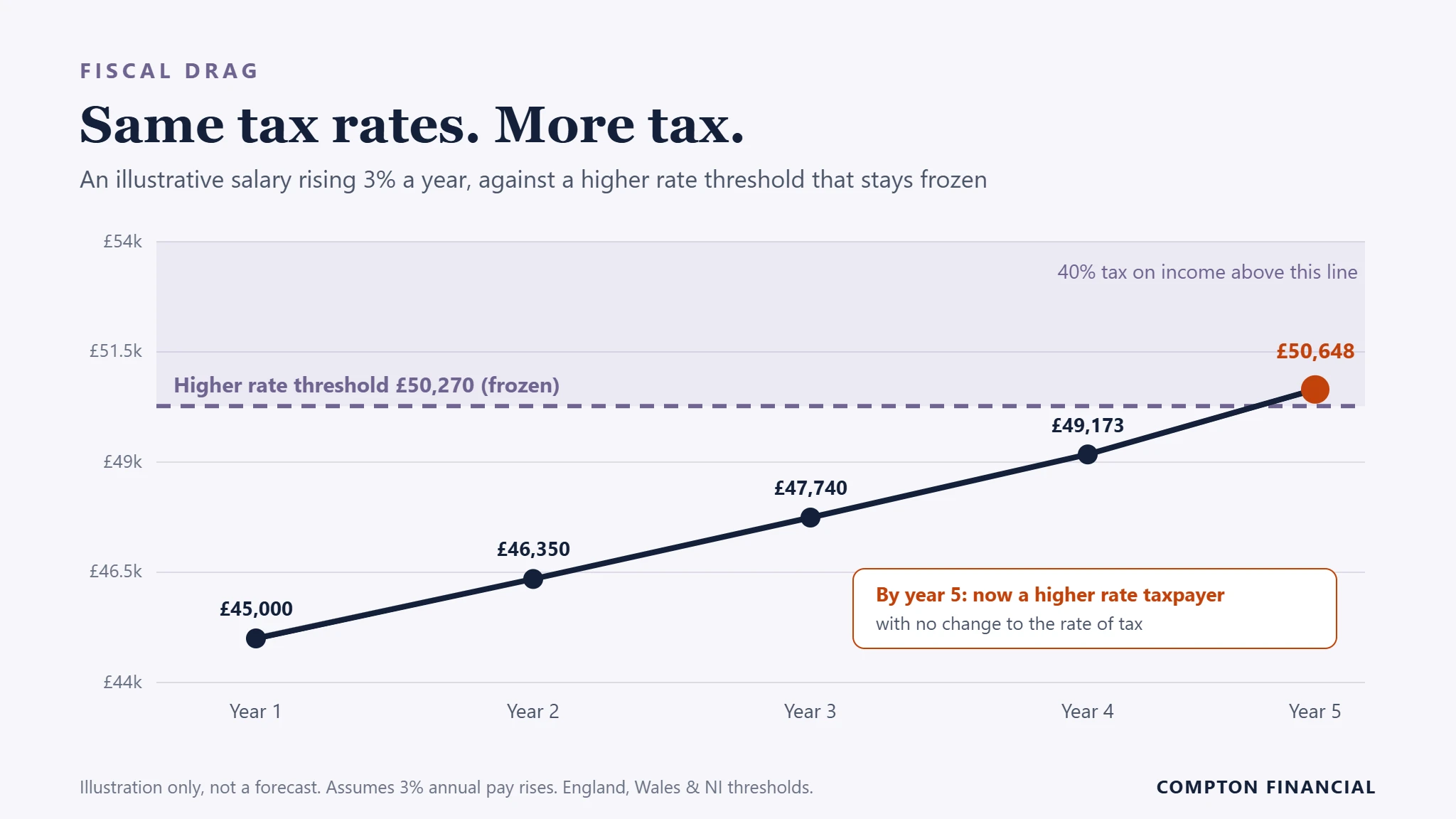
For 2026/27, the Personal Allowance remains at £12,570 and the higher rate threshold at £50,270 in England, Wales and Northern Ireland. As incomes rise, more people pay more tax even though the rates themselves haven’t changed.
Be prepared, not reactive
Your financial future is too important to be shaped by rumours, headlines or knee-jerk reactions. A better approach is to understand where you stand before the Budget and identify the areas that may need attention.
Whether you are approaching retirement, building your investments, running a business or thinking about your family’s future, now is a good time to review:
- pension contributions and retirement planning
- ISA allowances and investment planning
- Capital Gains Tax on investments or other assets
- Inheritance Tax, gifting and estate planning
- business remuneration, dividends and extraction strategies
- whether your investment strategy still suits current market conditions
Review before the Budget, act after it
You don’t need to predict what the Chancellor will announce. You need to understand your current position and where potential changes could affect you.
By reviewing your circumstances before 28 October, we can identify the areas that may need further thought. Once the measures, and the detail of any legislation, are known, we can assess whether action is right for you. That means less guesswork, fewer rushed decisions, and a plan built around your circumstances rather than the latest headline.
FREE INITIAL MEETING
Not sure how the Budget affects you?
Speak to a chartered financial adviser before and after 28 October. We’ll look at your pensions, investments and estate together, and tell you plainly whether anything in your plan needs to change, and what can wait.
✔ Whole of market chartered financial advice
✔ VouchedFor Top Rated Adviser, every year since 2021
✔ Meet online, at a time that suits you
✔ Free, with no obligation
This article is for general information only and does not constitute tax, legal or financial advice, and should not be relied upon as such. Tax treatment depends on individual circumstances and may change in future. Estate and tax planning are not regulated by the Financial Conduct Authority. The value of investments can fall as well as rise, and you may get back less than you invest.